
If you’re planning a trip to Tanzania, one question pops up almost immediately: Should I prioritize the Serengeti or the Ngorongoro Crater?
It’s a fair question—especially if you’re traveling with limited time or trying to understand how the Northern Circuit works.
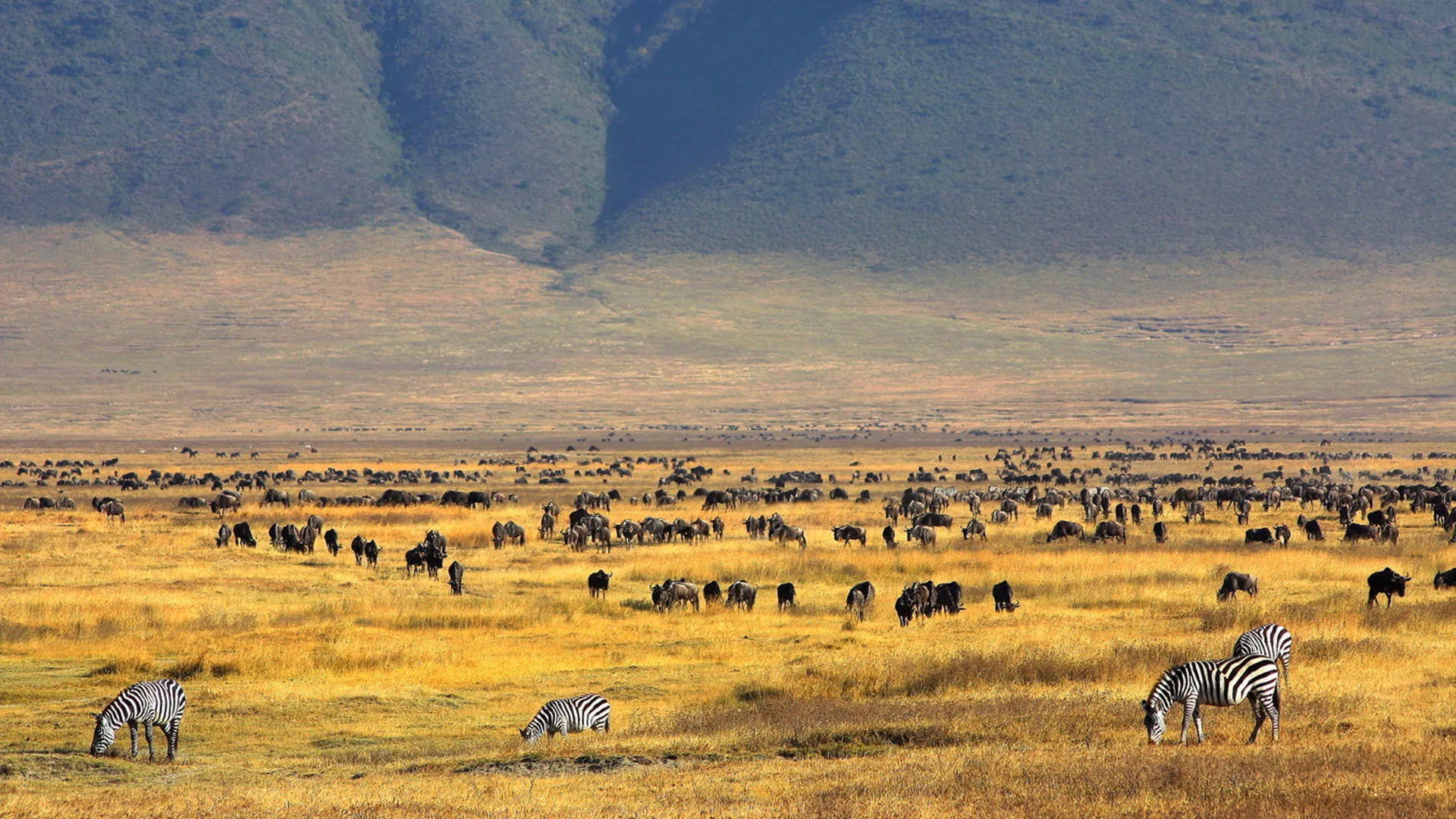
Most people know the Serengeti. It’s the name that shows up in documentaries, travel magazines, and every “top safaris in Africa” list. In many ways, the Serengeti is the world’s ultimate symbol of a wild African landscape. And the Ngorongoro Crater? It’s just as extraordinary, but in a completely different way. Picture an ancient volcano that collapsed into a perfect wildlife sanctuary, a natural bowl holding some of the highest densities of animals on the continent.
So, which one deserves more of your attention? Here’s the honest answer: you don’t have to choose.
In fact, you shouldn’t choose—because both destinations naturally fit into the same safari route.
Let’s break down why.
Why the Serengeti is special on a global scale
The Serengeti isn’t just famous—it’s iconic. This ecosystem plays host to one of the greatest natural phenomena on Earth: the Great Wildebeest Migration. Over 1.5 million wildebeest, hundreds of thousands of zebra, and gazelles move in a continuous circular pattern across the plains in search of fresh grass. It’s the largest land-mammal migration on the planet, and it’s the backbone of the Serengeti’s reputation.
But even outside of Migration season, the Serengeti stands out for several reasons:
1. Immense landscapes
The word Serengeti comes from the Maasai “Siringet,” meaning “endless plains.”
That’s exactly what you feel—an uninterrupted horizon stretching further than your eyes can reach.
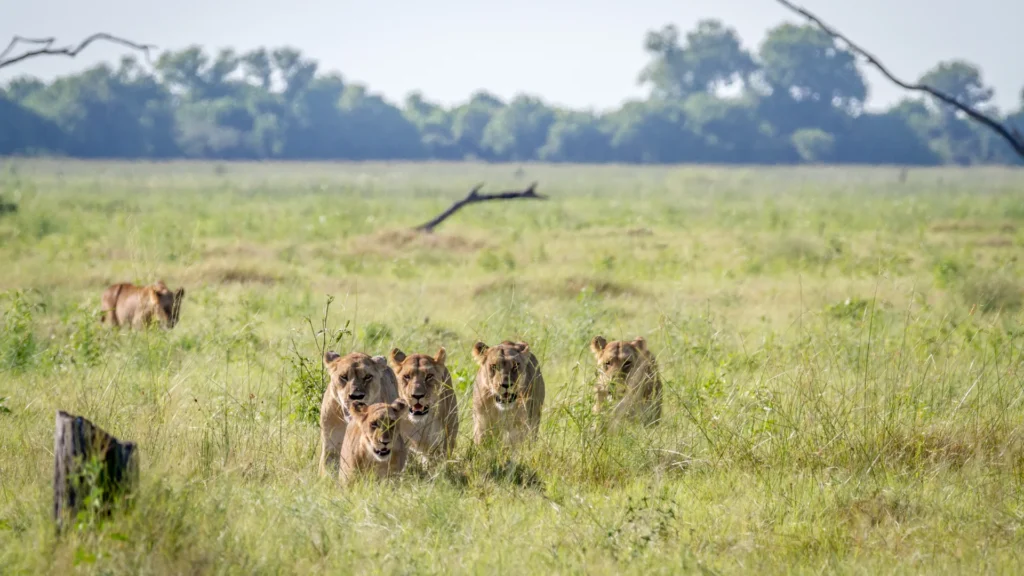
2. High predator density
Lions, cheetahs, leopards, hyenas—this is one of the very best places in Africa to see them. The open plains and large prey numbers create perfect conditions for predator activity.
3. Seasonal diversity
South in calving season, west for the Grumeti River, north for river crossings, central for year-round wildlife—every region offers something distinct.
4. Classic “Africa” feel
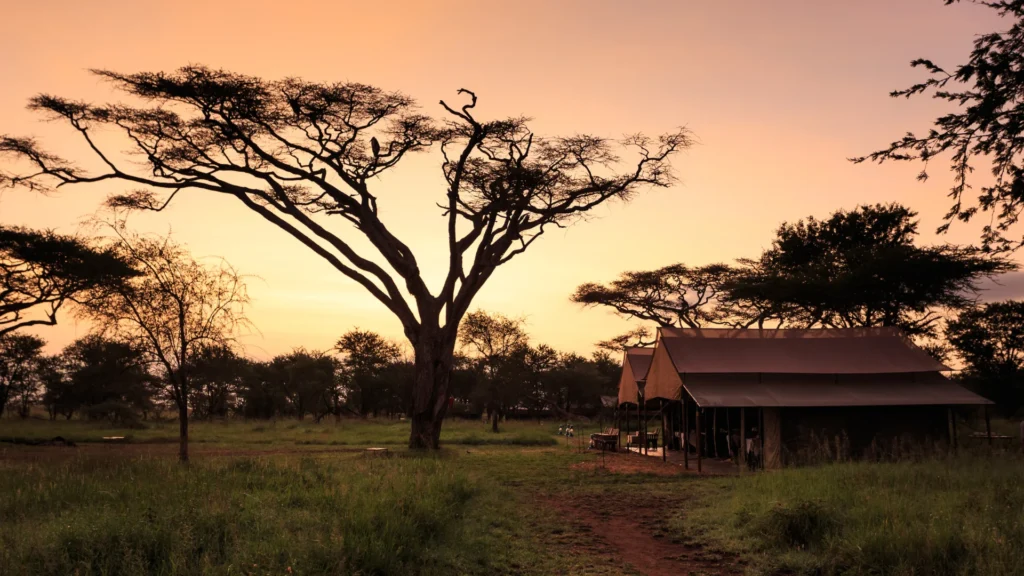
This is often the image travelers imagine when they think of a safari: acacia trees, golden grasslands, big herds, and dramatic skies.
It’s no surprise people feel like they haven’t “truly” done a Tanzania safari without experiencing these plains.
Why Ngorongoro is equally special (in a completely different way)
Ngorongoro Crater is one of those places where the moment you arrive at the rim and look down into this vast bowl of green, you immediately understand why it’s so famous. It feels like nature’s own amphitheater.
1. Wildlife density is unmatched
The Crater floor is only about 260 square kilometers, but it holds thousands of animals—lions, hyenas, elephants, buffalo, black rhinos, hippos, and more. Because it’s contained, sightings come quickly.
2. Big Five in one day is realistic
Unlike most parks where you need multiple days to try your luck, Ngorongoro compresses the experience beautifully.
3. Dramatic scenery
The descent into the Crater is unforgettable. You’re driving down the walls of a collapsed volcano into a micro-world of wildlife.
4. Different habitats in a compact space
Swamps, forests, open plains, lakes—it’s a diverse landscape packed into a small area.
5. Excellent for travelers with limited time
If someone has only 1–2 days and wants the highest chance of seeing a lot, fast, Ngorongoro is the answer.
It’s not “better” or “worse” than the Serengeti—it’s simply different. And that difference is what makes them perfect partners.
So… should you see the Serengeti first or Ngorongoro first?
Honestly, it doesn’t matter.
Most safaris in Tanzania’s Northern Circuit include both parks, regardless of order. This is because:
- They sit along the same travel route
- Driving times are logical between them
- Operators plan each trip around the Migration and road conditions
- Overnight locations depend on where wildlife is most active
The route can go either direction:
Arusha → Ngorongoro → Serengeti
or
Arusha → Serengeti → Ngorongoro
The experience is equally strong either way. You don’t lose anything by going in one order versus the other.
Driving times: what travelers should know
To give realistic expectations:
- Arusha to Ngorongoro: 3–4 hours
- Ngorongoro to Serengeti (central): 3–4 hours
- Arusha to Serengeti (direct drive): 6–8 hours
Because the Crater is closer to Arusha, some itineraries start with it. Others begin with the Serengeti because the Migration is in a specific area that time of year.
Either way, the flow is smooth.

How many days should you plan?
A safari shouldn’t be rushed. Long drives, early mornings, and full-day game viewing can be intense if you overpack your schedule.
The minimum meaningful time to combine Serengeti + Ngorongoro is:
3 days
- 1 day Ngorongoro
- 2 days Serengeti
This already gives you a solid experience.
But for a more balanced, relaxed trip:
4–6 days
This allows:
- multiple game drives
- breaks between travel days
- more time to follow animal movements
- flexibility for weather or road conditions
Remember: you didn’t fly all the way to Tanzania to spend only one night in these world-class parks.
Different “feelings” help you understand why both matter
Here’s an angle travelers connect with immediately:
- Serengeti feels wild and limitless.
- You drive for miles and feel like you’re part of a living migration.
- Ngorongoro feels intimate and concentrated.
- Every few minutes, something appears—lions resting, buffalo grazing, rhinos crossing.
This emotional contrast is why combining both parks creates such a complete experience.
Accommodation differences
Travelers also appreciate knowing what to expect:
- Serengeti
- Classic tented camps
- Mobile Migration camps
- Lodges inside and outside the park
- Stays feel remote and adventurous
- Ngorongoro
- Lodges perched on the crater rim
- Cold nights, warm fireplaces, dramatic views
- Most accommodations are fixed lodges rather than tents
Understanding accommodations helps travelers visualize the trip beyond wildlife.
Photography considerations
If your guests love photography (many do), explaining this helps:
- Serengeti: best for big herds, dramatic predator scenes, open-plains shots
- Ngorongoro: great for close-up portraits and varied landscapes in one frame
Visual expectations matter just as much as wildlife expectations.
The bottom line: You don’t have to prioritize—see both
Here’s the part most travelers don’t realize until they talk to an operator:
Serengeti and Ngorongoro are not an “either/or” decision.
They are designed to be experienced together. The Northern Circuit is built so that travelers can enjoy both without complicated detours or extra logistics.
Whether you start with the Crater or the Serengeti, the magic is the same. What matters is giving yourself enough days to enjoy them without rushing.